The Lonely Climb: Why Being a Solopreneur Is Harder Than It Looks
The isolation is real and no tool fixes it. The operational load is also real — and a surprising amount of that is fixable. Separating the two is the useful part.
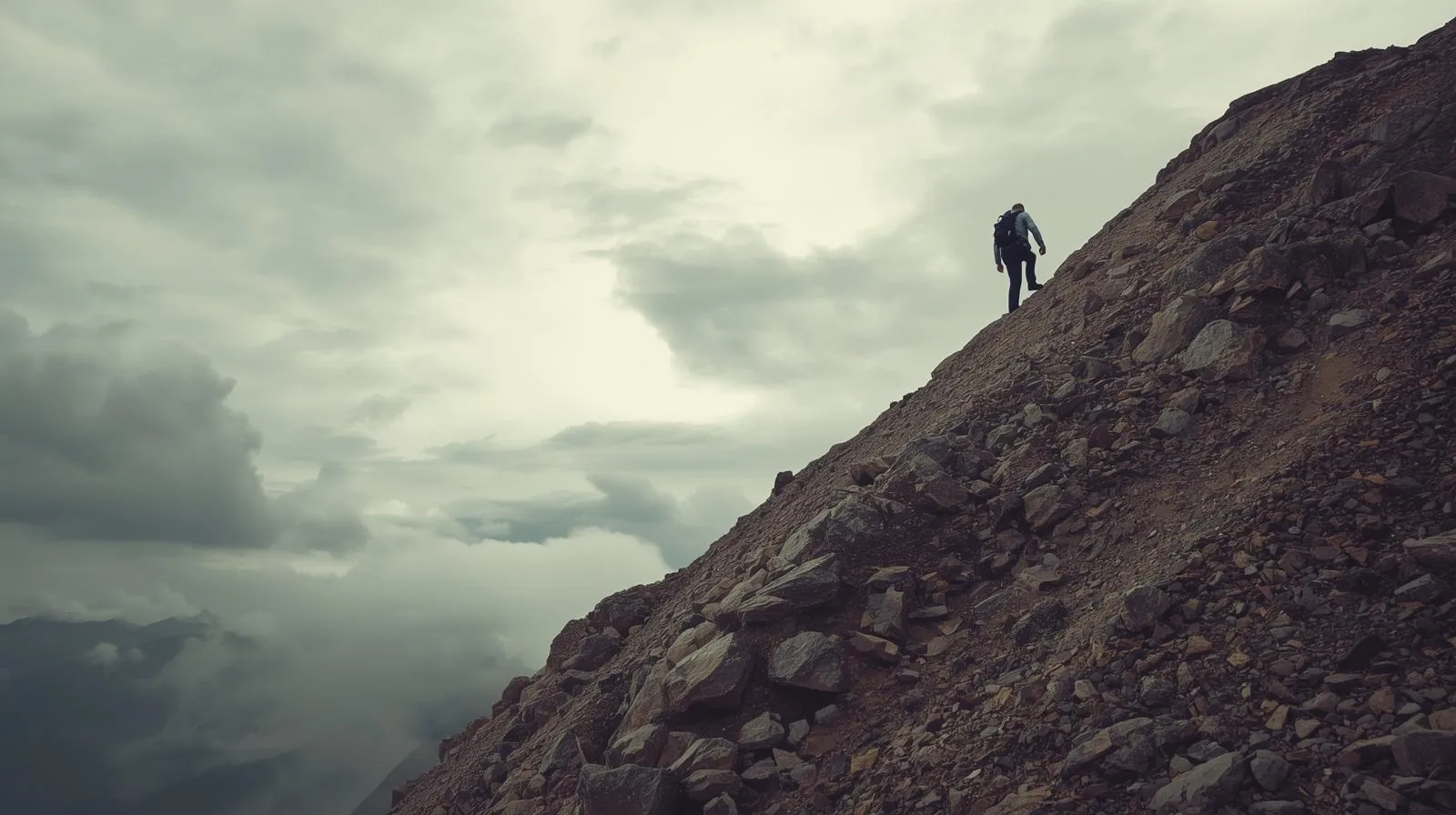
The Lonely Climb: Why Being a Solopreneur Is Harder Than It Looks
There's a particular kind of silence that fills a home office at 11 PM on a Tuesday. It's the silence of an entrepreneur who, just hours ago, was debugging code, responding to customer emails, creating social media content, negotiating a partnership, and wondering how they'll ever find time to eat dinner—let alone scale their business.
This is the reality for millions of solopreneurs and one-person founders around the world. They're not just building a business; they're becoming an entire company in human form. And while the entrepreneurial journey is often romanticized in startup culture, the day-to-day truth is far less glamorous—and far more exhausting.
If you're a solopreneur reading this, chances are you've already felt the weight of doing everything alone. Maybe you're drowning in tasks that span multiple time zones of expertise. Maybe you're burning out because there's no one to pick up the slack. Or maybe you're simply wondering if all this struggle is worth it.
Here's the truth: it is worth it. And you don't have to do it alone—not really. The right tools and automation systems can transform your journey from survival mode to sustainable growth.
The Hidden Struggles of the One-Person Founder
Wearing Every Hat (Even the Ones That Don't Fit)
When you're a solopreneur, you're not just the CEO—you're also the marketing director, the customer support representative, the accountant, the content creator, and the IT department. The average solopreneur switches between roles dozens of times per day, context-switching their way into mental exhaustion.
This constant role rotation sounds inefficient because it is. But there's no other option when there's no team to delegate to. Every task that moves your business forward must be done by you, which means you're always reacting to the urgent rather than investing in the important.
The Isolation That No One Talks About
Startup culture celebrates the grind, but it rarely acknowledges the loneliness that comes with it. When you're a solopreneur, you don't have coworkers to bounce ideas off of, celebrate wins with, or even just grab coffee with during a midday break.
Decisions become heavier because there's no consensus to lean on. Setbacks feel more devastating because there's no one to share the burden. And success? Success can feel strangely hollow when there's no one to celebrate it with you.
This isolation isn't just emotional—it can be strategic, too. Without a network of trusted advisors, solopreneurs often make decisions in a vacuum, missing insights that a team or community could provide.
The Resource Constraints That Define Everything
Budget is always tight when you're funding everything yourself. Time is always scarce because there's only one of you. And knowledge is always limited because no one can be an expert in everything.
These constraints force solopreneurs into impossible trade-offs. Do you spend three hours on marketing or three hours on product development? Do you invest in an expensive tool that could save time or put that money toward actual business growth? Every decision becomes a calculus of opportunity costs.
The Technical Mountain
For many solopreneurs, there's an invisible wall of technical challenges. Building a website, setting up email automation, managing content delivery, handling video streaming or media infrastructure—these are skills that take years to develop. Yet solopreneurs are expected to master them while also running every other aspect of their business.
The result? Many solopreneurs spend far more time fighting with tools than using them. They become accidental developers, accidental marketers, accidental sysadmins—none of which is an efficient use of their expertise.
The Turning Point: From Survival to Scaling
Here's what separates successful solopreneurs from those who burn out: they recognize that doing everything themselves is not a virtue—it's a liability.
The most effective one-person founders don't try to do it all. Instead, they build systems, use tools, and automate wherever possible. They identify the tasks that drain their time without moving the needle and find automation systems that handle those tasks for them.
This is where the right technology makes the difference: not just software that makes a specific task easier, but systems that remove entire categories of work from your plate.
What actually changes it
The advice solopreneurs get is almost always about mindset — delegate more, work on the business not in it, protect your calendar. It is not wrong. It is just unactionable when there is nobody to delegate to and the calendar is full because the work is real.
What changes it, in our experience, is narrower and more boring than that: removing the specific tasks that force you to be present for work that does not need a person.
Not "get help". Not "scale". Just: the enquiry that gets answered while you are on a job. The invoice that chases itself. The appointment that confirms and reminds without you touching it. Each one is small. What they add up to is the ability to be unavailable for two hours without something falling over — which is the actual thing you lost when you started working for yourself.
That is a systems problem with a systems answer, and it is worth separating from the emotional weight of the climb. The isolation is real and technology does not fix it. The operational load is also real, and technology fixes quite a lot of that.
What to do this week
You do not need a plan. You need a list.
Write down every task you did more than twice this week and roughly how long each took. At the end of the week, look at what repeats. Most solopreneurs are surprised — not by the total, but by which things dominate it. It is rarely the work they thought.
There is a longer version of that exercise in where your 10+ hours are going, including which items are worth handing off and which look expensive but are not.
Then decide what you would still be doing by hand in two years. Start there.
The climb does not have to be this lonely
Being a solopreneur is hard, and there is no sugarcoating it. The hours are long, the responsibility does not distribute, and nobody is coming to take a shift.
But the struggle is not evidence that you are failing at it. It is the cost of building something on your own terms — and a meaningful part of that cost is administrative rather than existential, which means a meaningful part of it is fixable.
You became a solopreneur for the freedom. It is worth defending the parts of it that a system can defend for you.
If you want an outside read on which parts those are, book a free 30-minute call. We don't guess. We diagnose — and we will tell you honestly if the answer is that you do not need us yet. You can also see what we do or what it costs before speaking to anyone.